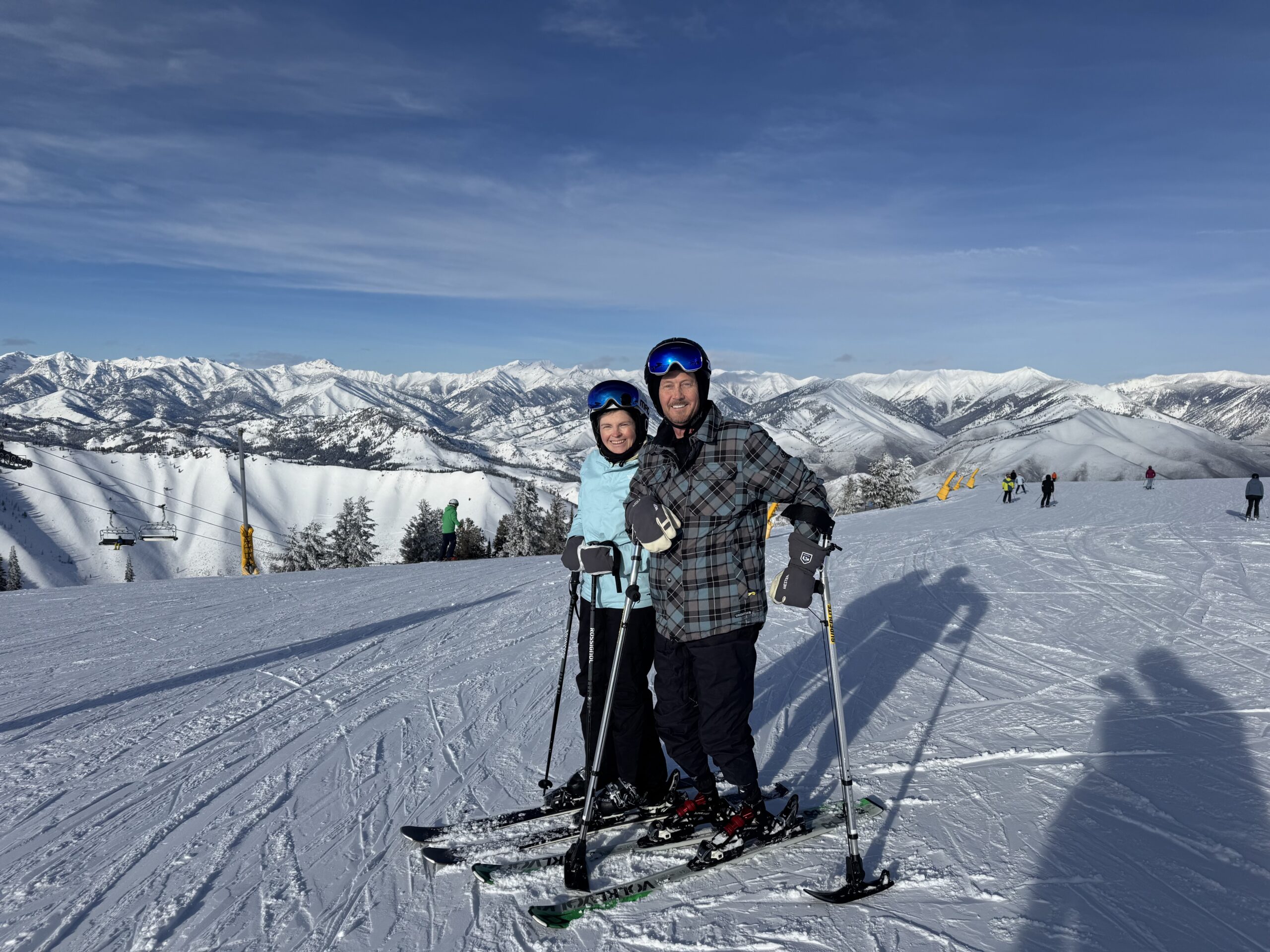
“It is hard to find the words to describe how I felt yesterday.  It reminded me of the first time I walked (again) and the powerful emotions it created.  There were times yesterday and Friday when I truly felt free and not confined to prosthetic legs.

I can’t say enough about the incredibly positive experience Melissa and I had with CAF and Higher Ground.  The generosity, the competence, and the care was just all top shelf.  I truly feel blessed to have come into your collective orbit.

Honestly I didn’t know what to expect of myself.  Although I was trying to maintain a positive attitude, occasional doubts crept in, and I questioned if (especially as a bilateral BKA) I could really ski as before.  But I had seen videos on YouTube with clips of bilateral BKAs being able to ski the first day they tried.  I thought, if others could do, why not me?

My prosthetist (Brian Greer, owner of Mobility Prosthetics in SLC) was absolutely amazing!  He helped me find the BioDaptive Alpine foot and even found a way to bill it to my insurance.  Not only was he extremely supportive but on Wednesday (my first lesson) he drove 5 hours to be in Sun Valley, helping me with any adjustments, and being there to support me.   His use of technology to create extremely well fitting sockets, along with his complete attentiveness and responsiveness to ALL my questions (days, nights, weekends, even while he’s on vacation) and all my text messages.  I would seriously consider investing in his company because of the unique approach which is seen with distain by many experienced prosthetists (although Brian has 20 years experience himself).  He’s got a product and process like no other!

So, Wednesday Brian met me at the hotel, adjusted my sockets and feet to three different lengths of skis (I came prepared!), and then joined me at the hill.  Cheyanne and Benji from Higher Ground were patient, experienced, and highly competent instructors.  I do have to say my first hour or so of trying to go up the very gradual incline on the magic carpet and then trying to ski back down was discouraging.  Getting up was SO hard and it seemed to take all my strength.  But all were very encouraging and I wasn’t about to quit!

By the end of day one I was able to successfully get on and off the ski lift and actually ski down a very basic slope.  Regardless of how much it hurt, it felt amazing good, just to know that I could make it down the run.

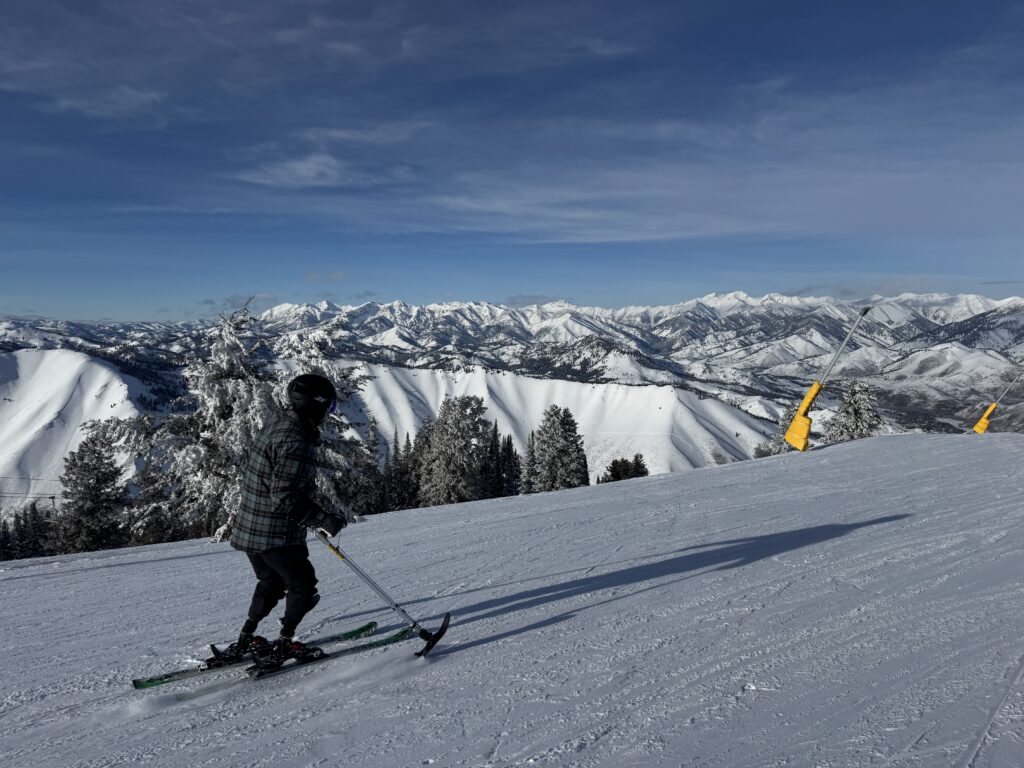
Thursday Cheyanne suggested I try outriggers instead of ski poles.  That made all the difference.  I wasn’t putting so much pressure on my limbs and it improved my posture, my confidence, and my capability!  By the end of Thursday Melissa and I were skiing together from the top of Dollar Mountain.  We were both emotional at the ability to regain that part of our lives we had boxed up, put in a corner, and tried not to mourn its loss.  At the end of Thursday Cheyanne and Benji quietly consulted and then proposed I meet them at the main mountain on Friday, asking if I thought I could do it.  I honestly had no idea but wasn’t going to stop!

The weather Friday was perfect blue skies, no wind, and temps in the mid to upper 20’s.  We took the lift which went about 1/4 of the way up the mountain and was just a longer, slightly steeper, beginner’s run.  Alan, I was able to ski it!  I was able to handle steeper terrain, make my turns, and not fall down quite as much.

Cheyanne and Benji asked how my legs were feeling and how many more runs I had in me.  In response to my reply of two or three, I was challenged to leave it all on the field and go to the top top of the mountain (over 9,000’ elevation, with a 3,000’ vertical drop, over about 1.5 miles).  I couldn’t say no but my apprehension increased as we went up, up, up, up…much, much farther than I imagined!

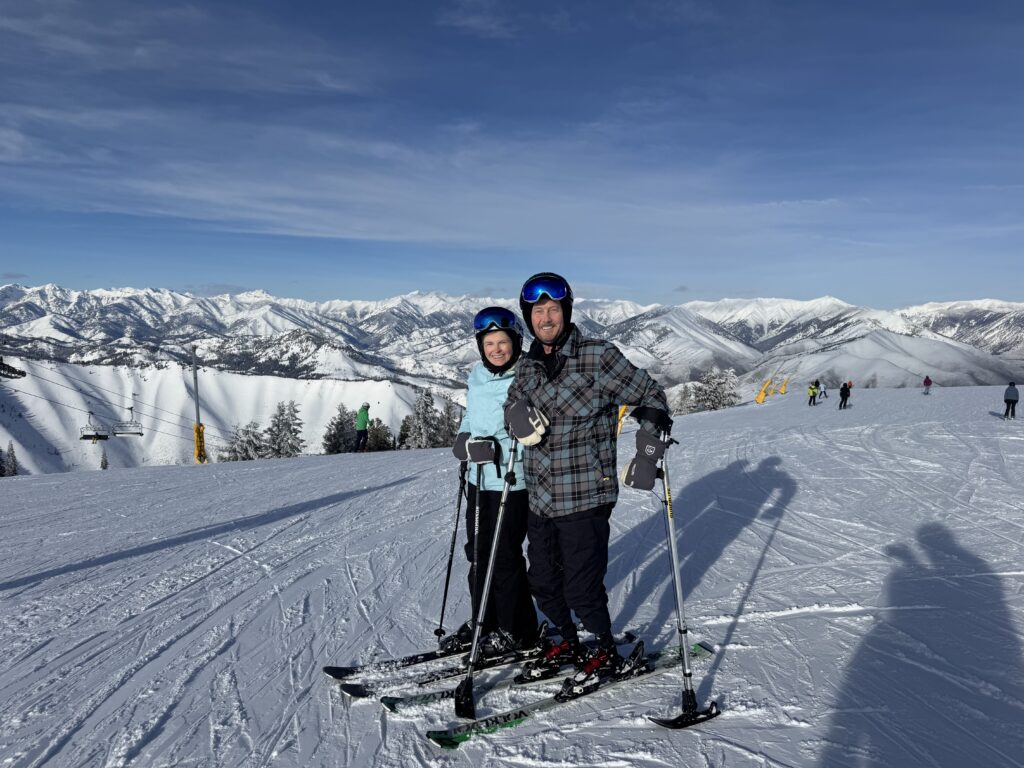
I got off the lift, we took some great pictures at the summit, and started down.  I was so tired but equally thrilled.  I kept going, they quit coaching, and we just skied!  The feeling of gratitude for all the people who’s support got me to that point is extremely humbling!   By the tine we made it down, the lifts had closed, and we called it a day.  But oh, what a day!  Within 72 hours I went from the most basic of beginners, with waning confidence, and pain because of injured pride and body, to a skier that went to the top of the mountain.

Again, I can’t say enough positive about the gift of the CAF grant, the quality of the Higher Ground program, and a prosthetist who helped make it happen.

(I’m attaching a couple pictures and videos of the experience.)

Alan, thank you for being such a source of encouragement and support.  Melissa and I are now preparing for the bucket list trip, using my frequent flyer miles, to ski the Alps at the end of the month.

Although I know there are always set backs, the forward momentum is picking up speed.  I will continue to press my limits and take calculated chances on my course to personal satisfaction and a renewed, full life with Melissa.” – Russ
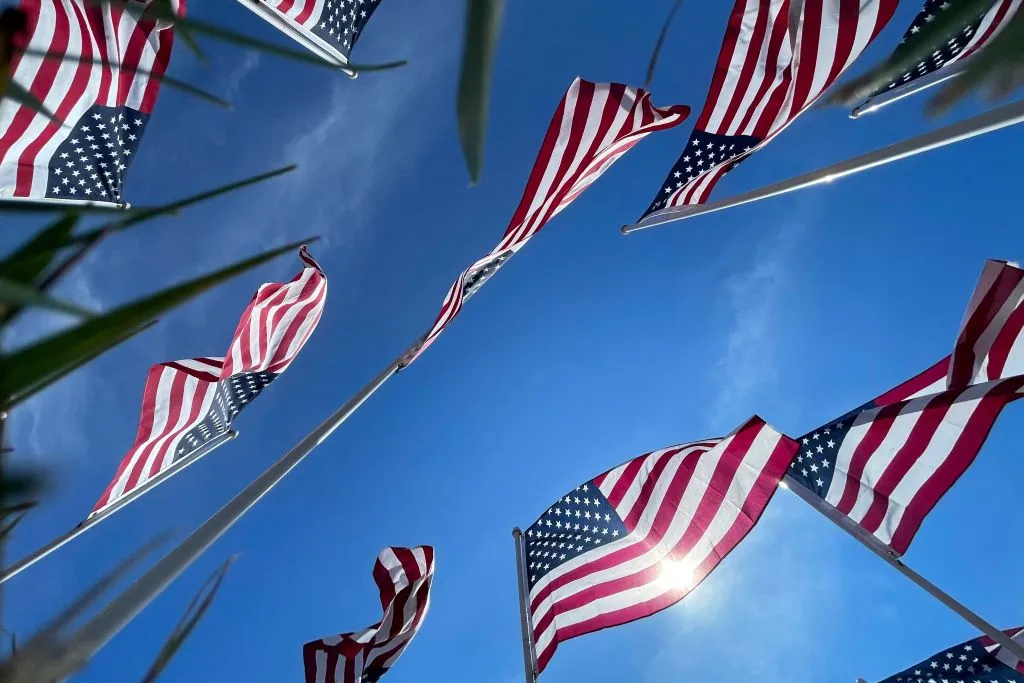
At Higher Ground, Memorial Day is more than a long weekend—it’s a solemn reminder of the courage, sacrifice, and selflessness of the men and women who gave their lives in service to our country. We pause to remember those who never made it home, while also turning our hearts and actions toward those who did.

Behind every fallen service member is a story of commitment and sacrifice, and behind every veteran is a journey—often marked by visible and invisible wounds—that continues long after the uniform is retired. For many, the transition to civilian life carries challenges that are difficult to face alone: physical injuries, post-traumatic stress, loss of identity, and disconnection from purpose or community.

That’s where our mission at Higher Ground begins.

The Power of Purposeful Recreation
We believe that healing happens when veterans are given space to move, breathe, connect, and rediscover themselves outside the confines of traditional clinical environments. Through adaptive sports and therapeutic recreation, we provide structured, transformative experiences that reintroduce joy, foster resilience, and build lasting peer support.

Whether it’s skiing down a mountain, paddling through rapids, or gathering around a campfire, each program is designed to challenge the body, re-engage the mind, and nurture a sense of belonging. Veterans often tell us that these moments—not medals, not ceremonies—are what help them feel alive again.

Support that Honors Sacrifice
Memorial Day reminds us of the cost of freedom, and it calls each of us to action. The best way to honor those who gave everything is to stand by those still carrying the weight of service.

By supporting Higher Ground, you are investing in recovery, reconnection, and long-term well-being for veterans, first responders, and their families. Your involvement makes it possible for us to expand access to life-changing programs across the country—programs proven to reduce isolation, improve mental health, and renew purpose.

As we lay wreaths and fly flags, let us also recommit ourselves to caring for the living legacies of those we’ve lost. Let us ensure that every veteran knows their service is remembered—not just with words, but with action, understanding, and support.

This Memorial Day, honor the fallen by standing with the living.

Story and photos by KAREN BOSSICK

Read the original article here.

For Shannon Oliver Kerrick, skiing was second nature. She grew up carving turns on Baldy and even conquered Austria’s legendary Hahnenkamm downhill in college. But in February 2024, while skiing at Bogus Basin, a high-speed crash changed everything.

The impact crushed her T6 vertebrae, broke both arms, and caused a traumatic brain injury. When she regained consciousness, her eyes were swollen shut, and she had no movement below the waist. After a month in the hospital, Shannon began an intense rehabilitation journey at Craig Hospital in Denver, where she used locomotor training to retrain her brain to send movement signals to her legs.

Just over a year later, Shannon stood before Higher Ground supporters at the 3rd annual Muffy Davis Cup, recounting her journey back to Sun Valley, back to Higher Ground, and back to Baldy.

“The first thing I thought of after my accident was Muffy Davis, and I knew there was hope,” said Shannon, a Wood River High School alum. “I knew about Higher Ground because our son, who is on the autism spectrum, had been part of their programs. When I finally returned to the mountain with my daughter, I felt happiness I hadn’t felt since my accident. Being able to ski with Higher Ground is like candy to people like me.”


An Experience That Changes Perspectives

For two days, seven teams of six skiers each took over Quarter Dollar for an unforgettable experience. Participants stepped into the world of adaptive skiing—navigating the mountain in monoskis, as visually impaired skiers, as amputees, or on ski bikes.

They even had the chance to try a $30,000 sit ski that operates with a joystick or by blowing into a tube.

“I always wanted to create an experiential event so people could truly understand what it’s like to ski differently,” said Muffy Davis, the event’s namesake. Paralyzed in a training accident in 1989, Muffy went on to win multiple Winter and Summer Paralympic medals. “These participants get to try equipment that costs thousands of dollars and see firsthand how a therapeutic recreation program like Higher Ground changes lives.”

Each team was led by a celebrity skier, including Muffy herself, who led the Devil Dogs—the team that raised the most money. Among the participants was Zach Sherman, a triple amputee who lost both legs above the knee and one arm in a motorcycle accident.

A former snowboarder, Zach moved to Boise in search of better adaptive opportunities. He outfitted a snowboard with custom bindings for his metal prosthetics and modified an outrigger with a ball instead of a ski for better maneuverability.

“Snowboarding is a big part of my life. It’s one of the few things I can still do since my accident,” Zach said. “I spend three months a year snowboarding with Higher Ground—it’s what holds me over the rest of the year.”


The Power of Perspective

One of the most humbling experiences came when Spencer Cordovano strapped on a snowboard as a visually impaired skier. With his goggles blacked out, his only guidance came from his guide, Toby Arnett, who skied behind him calling out commands:

  • “Almost there!”
  • “Turn now!”
  • “Across the hill!”

“It was one of the hardest things I’ve ever done,” Spencer said. “On a snowboard, you have one point of contact, and I had no idea if I was going fast or slow.”

Toby, guiding a visually impaired snowboarder for the first time, admitted he was nervous.

“Being responsible for someone else’s safety was humbling. It gave me a whole new perspective,” he said.

Higher Ground CEO Cole Petrie emphasized that the Muffy Davis Cup takes Higher Ground back to its roots. Muffy herself learned to monoski from Marc Mast, the instructor who founded Sun Valley Adaptive Sports—the organization that eventually became Higher Ground.

“This event allows the community to see how difficult it is to master adaptive skiing,” Cole said. “Even volunteers who assist visually impaired skiers are getting their first taste of what it’s like to actually ski without sight.”

“At Higher Ground, we make what seems impossible, possible.”


Champions of the Day

The event ended with awards celebrating skill, perseverance, and community spirit:

🏆 Fastest Visually Impaired Team: Tony Price with guide John French
🏆 Fastest Three-Tracker: Travis Zerba
🏆 Fastest Monoskier: Colter Brehmer
🏆 Fastest Ski Biker: Sarah Burke
🏆 Fastest Celebrity Skier: Muffy Davis
🏆 Best Crash: A tie between Amber Kennedy and Daniella Stokes
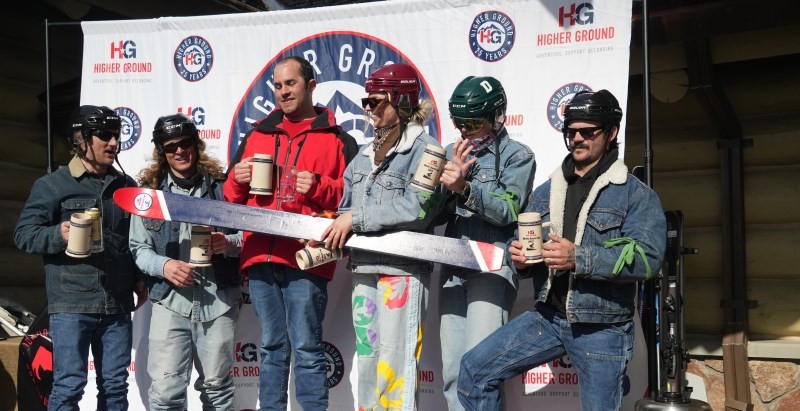
🏆 Best Costumes: The Denim Destroyers
🏆 Turtle Award (Longest Time on Course): Spencer Cordovano & Toby Arnett
🏆 Fastest Team: Denim Destroyers

For the third year in a row, the Devil Dogs took home the Muffy Davis Cup trophy, raising $25,000.

“I bleed Higher Ground!” said John French, a longtime supporter and member of the winning team.


DID YOU KNOW?

More than 400 volunteers support Higher Ground’s winter and summer programs.
✅ Volunteers put in 6,000 hours last year—1,000 more than the year before.
Higher Ground is fundraising $9,500 to purchase a Joelette, a high-tech one-passenger hiking rickshaw that will help kids with mobility challenges explore mountain trails.

Join us. Support our mission. Help us redefine what’s possible.

Read the original article here.

🎧 Listen Now!

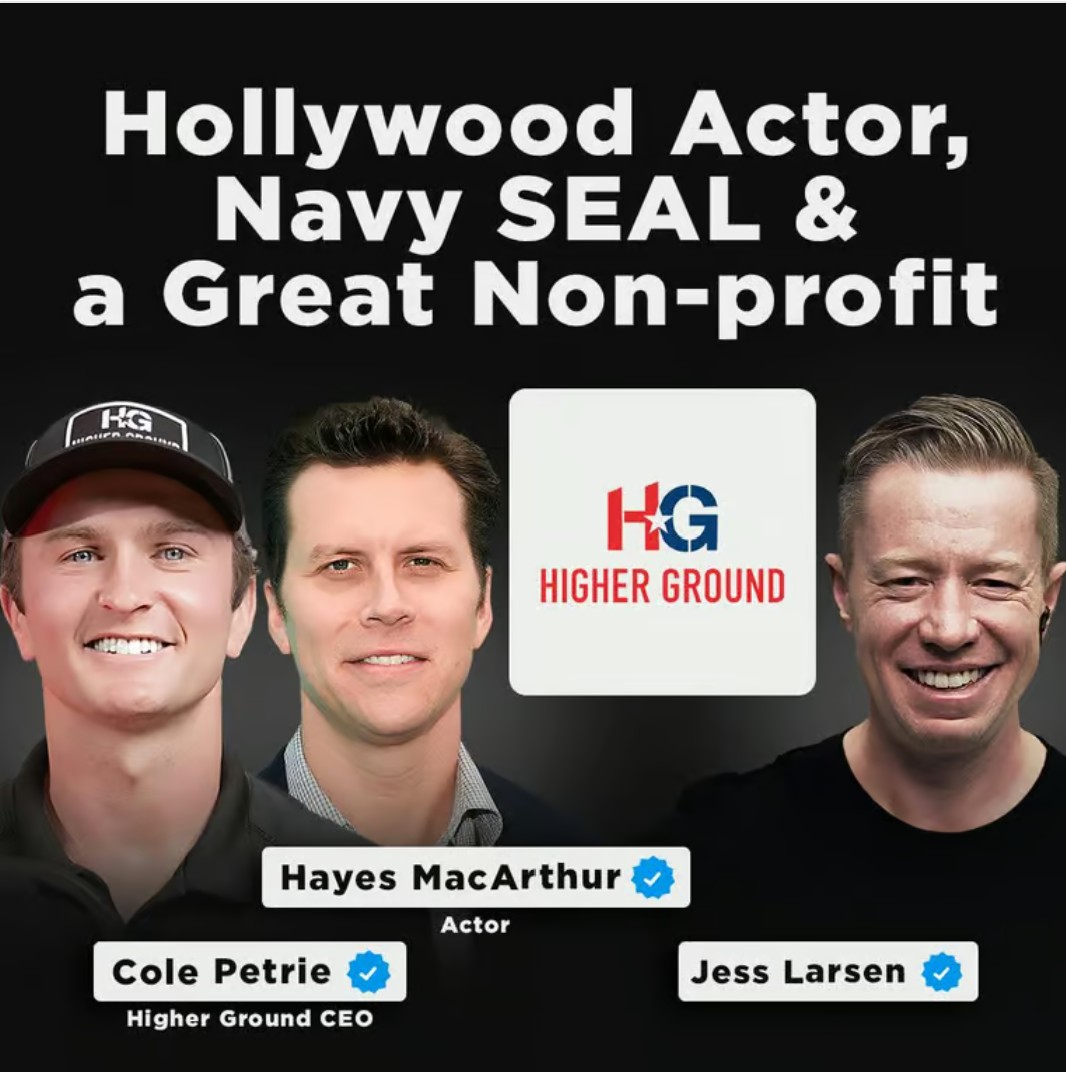
Hollywood actor & comedian Hayes MacArthur and Cole Petrie, CEO of Higher Ground, joins Jess Larsen for an inspiring conversation.

💡 Overcome Challenges & Stay Committed
Discover the mindset needed to push through setbacks, stay committed to your goals, and turn obstacles into opportunities.

🏅 The Power of Adaptive Sports
Learn how adaptive sports empower individuals to overcome adversity, build resilience, and transform lives.

😂 Wisdom, Perseverance & A Few Laughs
Whether you’re chasing success in business, entertainment, or personal growth, this episode is packed with valuable insights and inspiration.

🎧 Listen Now! Don’t miss this incredible conversation!